
Prachi Jain entered the vegan travel industry in 2016, and is now a cofounder of the Ahimsa Travel Club. Jain recently spoke with me about her previous company, Escape To, and why she decided to merge it with Kim Giovacco’s company, Veg Jaunts and Journeys. She also shared her goals for vegan outreach and her insights on why vegan travel is not solely about food. Below is our interview.
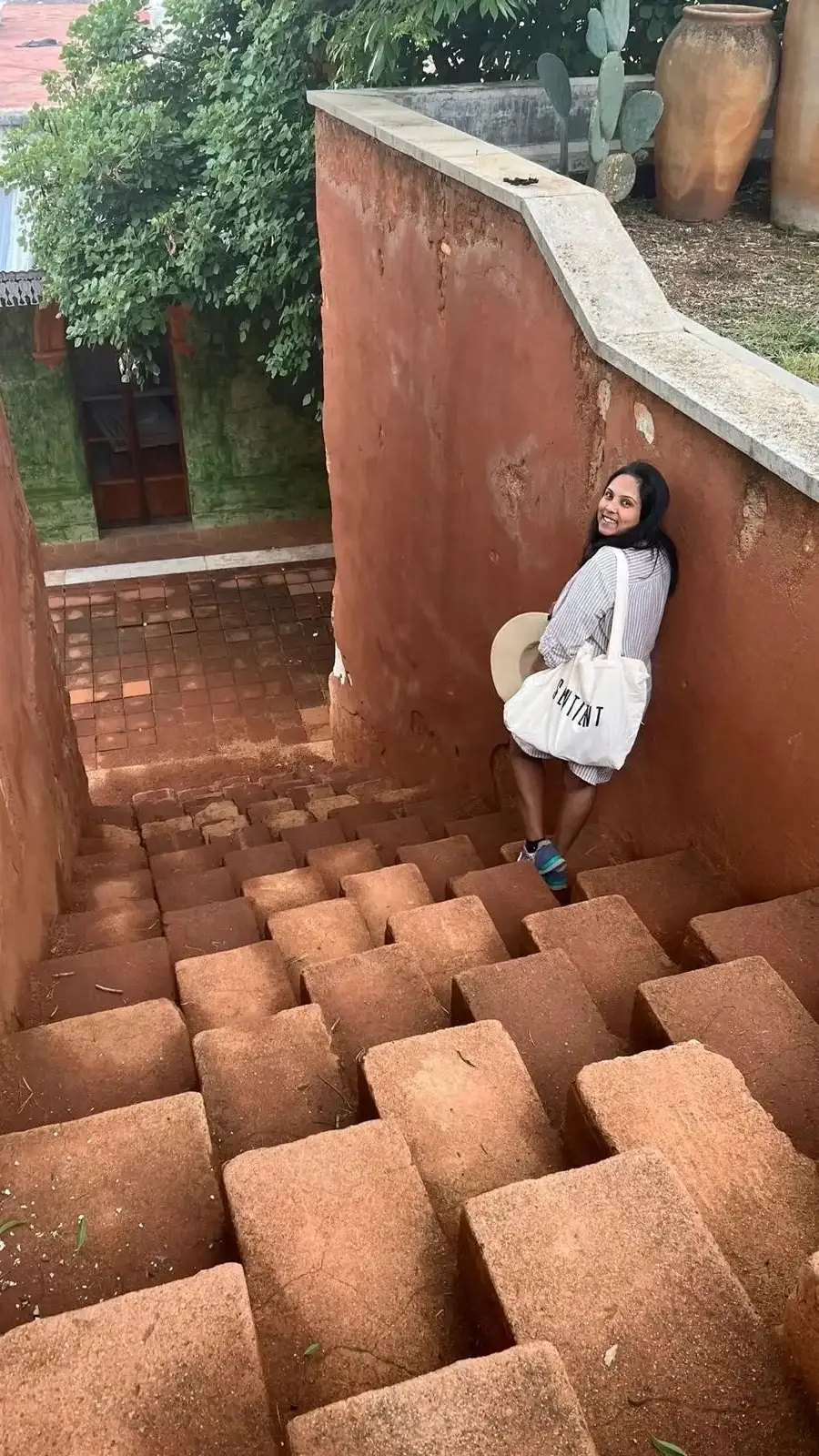
This post’s featured image is of Prachi Jain during a group tour in Oaxaca, Mexico.
Dynestee Fields: My first question is, can you define the vegan travel movement and explain how it relates to other movements, such as animal rights, environmentalism, and cultural preservation?
Prachi Jain: Thanks. What I would say is, me and my company, Ahimsa Travel Club, are trying to be a more intersectional company, incorporating all of those things: the animal rights movement, environmentalism, and cultural preservation. I would just add human rights to that as well.
Ultimately, for me, as a vegan, that’s the ethos that I believe in. You can’t really always have animal rights without environmental rights, without the cultural preservation, without the human rights. I think they’re all interconnected. When we work in silos, rather than seeing all of these things in a symbiotic relationship, I feel like we’re not really gonna achieve success in any of them.
So for me, the vegan travel movement would be about that intersectionality. I would say in the industry, what I’m seeing right now is lots of great organizations that are trying to build toward that, and then I think that there is also some room to improve.
Sometimes, in my opinion, it can get just too into vegan food and that’s all that vegan travel is about. So for me, it’s more about uplifting the animals, the earth, and people.
DF: Thank you for sharing that. Hopefully, we’ll get into more about how each of these components come into play in your travels.
PJ: Yeah. Absolutely.
DF: Wonderful. What introduced you to the vegan travel movement? What was your initial involvement?
PJ: So, I’ve had a travel company since 2010. I actually started it in September of 2010. So this year is actually 15 years of me running my travel company. But, initially, it was not a vegan travel company. It was volunteering abroad. So we were into voluntourism, specifically to India. And then as the team grew, we started hiring people.
Around 2015 into 2016, we started working with some folks who really wanted to prioritize profit over values and ethics. There was a conversation that happened where they wanted our travelers to basically get involved in crab catching as a tourism activity.
For me, my background is that I was vegan, Jain, and didn’t use animals in travel. So that [the conversation about crab catching] initiated for me, a pause where I thought, “Hey, this doesn’t align with my personal values of being vegan and compassionate toward animals.” And I don’t want my travelers to engage in animal cruelty. So, when I had that discussion with that former team, there was a lot of resistance. They said, “Well, you shouldn’t really put your values into the company because it should be dictated by business.”
And so that just didn’t sit well with me. And so this was now, going into the middle of 2016. So I halted everything. I stopped working with them, and I just stopped hosting travelers for a solid year and a half.
And that’s when I really went deep into my value system and what I believe in. It then sort of emerged that I wanted to fully shift into vegan travel.
It’s because that’s just how I travel. And I was always conscious of being vegan when I travel. And so, I thought, “Okay, I will probably lose a lot of money because now we’re going to be catering to such a small niche of travelers. But it’s the only thing that I think can allow me to feel good about the work that I do.”
So that was the genesis of this company—which was really that I just realigned what my values were. I was hoping that people would want to participate, and so far they have.
DF: So, I want to get a little bit of clarification. You said you are vegan and Jain? For those who aren’t familiar, can you explain what Jain is? I assume Jainism?
PJ: Yes, Jainism. So it’s actually the inspiration for the name of our company now, which is Ahimsa Travel Club. So Ahimsa means “nonviolence” in Sanskrit, and it’s the core principle of this religion. For me, it’s really more of a philosophy.
Basically, with Jainism, you try to be nonviolent in your actions, your thoughts, and your words. And what that translates to is removing animal cruelty completely from the clothing that you wear to the food that you eat. Some Jains will not eat root vegetables because they’re pulled from the ground. They only eat food that is harvested, or they’ll be very, very careful, even when they walk, to make sure that they’re not stepping on bugs and ants. So it’s all about protection of life. So I think that, for me, the Jainism component and the veganism component was a perfect marriage because I think the definition of veganism is technically no animal byproducts, right?
Jainism, I think, takes that one step further, and it says, “Okay, well, no violence to any living being.” And interestingly, it also doesn’t want violence toward nonliving beings. You can see, like, books are behind me, right [points at a book shelf behind her]?
A book would be a nonliving being, but Jainism says you would want to also treat a book with respect and not kick it or not throw it with disrespect. So there’s just this sacredness of all of existence.
So yeah, I think Jainism, Ahimsa, and veganism are sort of this really wonderful, beautiful way of life that I personally try to live by. I’m not perfect, and I get it wrong many times, especially when I see a spider or something. That is just the personal way that I live.
DF: Thank you for sharing that. So you said the visitors, or the travelers on the trip, were being asked to do an activity that was cruel to animals. Could you elaborate on what that activity was?
PJ: Yeah. Back in 2015, with a separate company—my company used to be called Leave Your Mark, and it was just volunteer travel—we were putting together an experience for travelers to come volunteer, but they were going to be in the coastal area of India, so by the beach.
I guess one of the things that they do over there in the coastal communities is crab. They catch crabs. I don’t really know anything about interacting with that, because again, with my upbringing, we were never allowed to really engage with animals in that way or disturb them in any capacity. So for me, it was quite new. So when somebody that was on our team said that, it just immediately felt wrong. Seemed wrong. Why would we want to disturb sea creatures, and upset them, and scare them only for tourism?
And I think this happens a lot in the travel industry at large, and that’s where I think the vegan travel movement can really make an impact: we really cannot be cruel to animals just in the name of travel or in the name of culture.
We didn’t end up doing that activity with the travelers that came, so I’m very happy about that.
I think that you can still go to the coastal area of, let’s say, India and not participate in animal cruelty.
DF: So did Leave Your Mark become Escape To?
PJ: That’s right.
DF: Perfect. Escape To is the company that you started that eventually became a vegan travel company?
PJ: Exactly. Exactly.
It’s been a journey because it was Leave Your Mark, then Escape To, and it’s now Ahimsa Travel Club. I think for the first time in 15 years, I really love the name of my brand. Finally.
I didn’t really like Escape To. I think it didn’t embody what we do because we’re not really trying to do escapes. We’re doing more meaningful, connected experiences. Escape To never really felt like it really resonated with me.
Leave Your Mark was cute, I think. But, I’m just really happy with the new brand name.
DF: I love the brand name, too. Hopefully, there’ll be some merchandise. You know, the t-shirts with the company name on there?
PJ: Yes. Actually, I was just looking into getting some hoodies and t-shirts and even water bottles printed. So yes, I will definitely get those out soon.
DF: Looking forward to seeing them!
PJ: Thank you.
DF: I was going to ask: When you began working in vegan travel, what was the state of the movement as a whole? What is its current state?
You mentioned a little bit earlier that there could be more intersectionality between each of the areas that are being touched: human rights, environmentalism, and animal rights. Could you explain?
PJ: Absolutely. I like to think about the vegan community as sort of the OG [Original] vegans, you know? I’m thinking about the hippies from the 60s, and there was a big push toward vegetarianism in the United States. Obviously the UK, too, during the hippie movement when the Beatles went to India and then came back, and then the hippie movement started. And so, you see a lot more vegetarianism popping up in the United States in the 70s and 80.
So I think the first crop of vegan travel companies really came from that. I’m not calling all of them hippies. But. I imagine that original vegan movement, which was all about potlucks and community, those folks certainly started incredible vegan travel companies. Obviously, Kim [Giovacco] is one of them.
Her company, Veg Jaunts and Journeys, has been doing this. It’s really one of the first companies. Another one is Vegan Travel Asia, or VegVoyages. They’ve been doing this. They do incredible tours as well.
I think everybody had their own countries that they were specializing in, and I personally thought that we were only gonna stay in South Asia. I thought we were just gonna be doing India and Sri Lanka. So it [the vegan travel company movement] was new, but people were doing really great routes and not expanding as much. People were doing the routes and itineraries that they knew and did well.
So that was how it was in the beginning. I still remember, even a couple of years ago, reaching out to Kim, or her reaching out to me, and we would talk about things and try to be collaborative and just help each other out on a question about marketing and sales and stuff like that. Then there were lots of travel bloggers.
Not like Instagram and what we have now but just bloggers who would really take a long time to get immersed into vegan culture. So I think there was a lot of working with these bloggers, which was really nice.
It’s evolved now. There are lots of young vegans, which is incredible. A lot of young vegans are trying to do tours and trying to find their footing in the industry. Basically trying to get their followers to go on tours with them. Maybe they’re trying to start travel companies, or they’re just trying to engage more with their followers. But that is the current state right now. Several influencers are certainly getting involved and doing tours as well.
DF: Can you name any of those influencers? We may want to follow them to learn a bit more.
PJ: I specifically work with Justin plus Lauren. I love her work. She’s amazing. She’s actually done Mexico City with us. She’s done North India with us. If you go take a look at her content, it’s just incredible.
We worked with Wendy of The Nomadic Vegan. I think she doesn’t update her blog as much, but she still guides the Italy and Portugal tours. So yeah, The Nomadic Vegan is really good too.
DF: Are they a part of your company? You said they may want to start their own, so they’re just travelers who go along on these tours and document them?
PJ: With these influencers and bloggers, they have their own blogs or their own social media channels. So that’s their main source of income.
And then I think maybe they want to go on a trip, or they like a place, and they want to take their followers along. We’re seeing a lot more of that coming through.
I think Lauren did a couple of other ones. You’d have to check her page: Justin plus Lauren. I feel like she did Italy, if I’m not mistaken, and then I think she did Iceland or is doing Iceland.
DF: Okay. I’ll have to look into them, and I’m sure the people reading will check in as well.
PJ: Sounds great.
DF: The Ahimsa Travel Club is a recent merger between Escape To, your travel company, and Veg Jaunts and Journeys, founded by Kim Giovacco. What inspired you and Kim to merge companies?
PJ: I think that we were doing a lot of similar types of tours. What I really respected and appreciated about Kim’s tours is that, oftentimes, she actually went to the destination and scouted out her favorite places and built an itinerary around that, and she was just so good at that.
And I’ve done the same thing. All of the destinations that we have, I’ve been there. Or I have a connection there. Like Japan, for example. My family lives there.
That’s where my relatives vacation: Japan. So, that’s why I was like, “Okay, I want to add Japan because these are the places that me and my family like to travel.”
Or Mexico City. I had a really good friend who was living in Mexico City. And then I just went to go hang out with her, and then I developed a tour.
I think [Kim and I] always did that. And she did that more so in Europe and the US and then parts of Asia, like South Korea and Singapore. And we [Escape To] were concentrating in mostly Asia, as well as South America. Latin America.
So I just thought, “Okay, we are doing a lot of similar work. It’s not easy to build itineraries from scratch.”
It is a lot of work, especially because when you want good, delicious vegan food, you have to go on the ground and research it and everything.
And so sometimes I would look at her tours, and I would be like, “Oh, that sounds perfect. I want to go on that tour.” And she actually ended up going on my Mexico City tour two years ago.
And so I feel like we just had this complementary professional relationship. And then somehow, it was like, “You know what? Why don’t we just pool our resources together and make a bigger impact.”
Also, I think a big part of what we want to do is help the amazing people that work with us: our tour leaders, our trip leaders, our vendors. We just want to give them more jobs and more work, and one of the best ways for us to do that is to essentially be able to offer more frequent tours for them.

Jain stands with her Sri Lanka trip leader.
So that was one part, and then I think the other part is our travelers and our community. We have some overlap in our community: folks that traveled on my tours that would love her tours and vice versa.
And what we want to do in the Ahimsa Travel Club is also just really allow people to connect offline, outside of the tours; become friends; and visit each other.
And that just made more sense if we pooled together. So we have this larger community of travelers that can visit each other. Somebody that you met on Kim’s tour in Italy maybe lives in California, and then you can stay connected and become friends.
So yeah, I think a lot of it is impact, customers, and just being able to support one another.
DF: The next question largely feeds into your answer. How do your and Kim’s areas of expertise complement each other? Do you have a little bit more that you can share about that?
PJ: I think that, ultimately, part of it is geographical. Because Kim has Europe down, she can create a tour in Europe with eyes closed.
We started Switzerland last year or two years ago. And, we actually did really well in Switzerland.
But again, it took a lot of time to put that together. So, I’m really looking forward to learning from her and merging ideas about the Europe tours.
Same with me with other destinations. I think I do really well in the Global South because that’s where I’m from.
I feel most comfortable in crazy, large cities like Delhi and Mexico City. I don’t find those places intimidating at all. I think geographically, I gravitate toward Latin and South America and Asia, and soon Africa as well.
I feel like we have a lot to learn from each other and complement each other on: like our destination knowledge and then obviously just community building.
Kim has her clients that absolutely love traveling with her, and my clients, too.
I think just between her travelers and our travelers, we’re looking forward to merging everybody and having a stronger impact.
DF: What was the original mission of Escape To? And your first travel company, Leave Your Mark? How have these missions carried over into the Ahimsa Travel Club?
PJ: Oh, it’s funny to think about Leave Your Mark because it’s so long ago. I stopped working on Leave Your Mark in 2016. Because we were doing volunteer travel, it was essentially like a cross-cultural exchange so that volunteers could have meaningful travel experiences. So you weren’t just traveling for just the sake of traveling but doing something meaningful. You know, doing some volunteer work with water and environmental issues, or women’s education, girls’ education, women’s empowerment, and things like that.
For Escape To, we carried that over. We decided to merge vegan travel with, again, a strong focus on cultural preservation.
So we were trying to always engage with Indigenous communities. For example, in Oaxaca, going to spend time with the Zapotec community and, again, allowing that intersectionality [animal rights, human rights, environmentalism, and cultural preservation] to come through.
And so I think in terms of all of that carrying over into Ahimsa Travel Club and, of course, with Veg Jaunts and Journeys too. I think the idea is now to, again, merge all of those things: Animal rights, environmental, cultural preservation, as your first question asked.
Then also community. I think we’re really gonna go stronger on the community aspect because it’s something that we desperately need.
I think the Surgeon General for Biden? When he left his post earlier this year, his last report basically warned that the United States, in particular, is in a loneliness epidemic. And it’s actually affecting our physical health because we are getting lonelier and lonelier. Because we don’t have communities anymore.
And so we really want to triple down on having this be a community for vegans. Or even nonvegans who are just curious about vegan lifestyles or just any lifestyle that allows you to reduce harm to animals and the environment. So we want to have a home for all those folks, and I don’t know what that looks like exactly. We’re building it as we speak.
I can imagine that we’re going to allow more opportunities to be available that foster connections. Maybe that means more reunion dinners. Maybe that means events and things like that that happen all across the world. Maybe that means helping all of our vendors at one destination come together and have a dinner and everybody gets connected. So yeah. I think more human-to-human connection.

Jain, with her clients, visits an outdoor market during a tour.
DF: Wonderful. Are you still continuing your volunteer and internships program? Did those transfer over from Escape To and Leave Your Mark into the Ahimsa Travel Club?
PJ: I think we’re not gonna be continuing that as much right now. We have a team in India, and they’re amazing, and they do that stuff. So I might refer folks to them that would want to do volunteer travel. I think we’re not focused on that as much right now.
DF: So how does the mission of the Ahimsa Travel Club shape your choice of trip locations?
PJ: Yeah. Absolutely. First of all, what I really love is off-the-beaten track destinations that folks wouldn’t always think about as a holiday. And then you go there and you’re like, “Oh wow, that was much better than I ever expected.”
For example, the first tour we ever launched was actually Bangalore and Coorg in India. I don’t think anybody has that on their bucket list.
So, I wanted to combat overtourism because the travel industry in general is having a huge problem with 90% of travelers only traveling to 10% of the destinations in this world.
So, what we would love to do is help distribute that travel a little bit more to lesser-known destinations.
We will have more opportunities that if travelers would like to help us combat over tourism, then you can go on, like, a Bangalore/Coorg tour, or you can go to, like, Etla in Mexico. Just lesser known areas, and I think that will help us with spreading a lot more of the message to more areas that are lesser known, or smaller cities, or villages, and things like that.
That being said, we do have some core trips that are your basic bucket list ones. For example, we just have launched an Italy one, which is in Florence and Sicily. And, we have one coming up in Japan in Tokyo and Kyoto. So some of them are going to be the more popular destinations.
And I think a big part of that is because we love supporting veganism and the vegan industry around the world, and some of these cities, like Mexico City and Tokyo and Kyoto are really killing it with their vegan scene. And there’s so many amazing vegan entrepreneurs and vegan food startups. So a big part of why we choose the locations is also to help support those vegan ecosystems.
I think travelers can expect from us to have both the bucket list places and then also some off-the-beat travel.
DF: Wonderful! That was a very rich answer. Thank you for those details. What takeaways have travelers had after going on your trips?
PJ: I think each destination has its own takeaways. But to sum up, I would say that we try to create a little window of a peek into that destination’s energy.
So when folks go on our India tour, it’s pretty transformative because you are traveling through time. From ancient India into modern India, from very rich India to very poor India. Like very extreme.
I think the takeaways that travelers have after India in particular is gratitude. Gratitude for their life and just really appreciation for what they have because they see a lot of people that don’t have a lot. That is hugely transformative. Because it’s very rich in many other ways, some of the takeaways are often surprising. Like, “Oh, the media never told me that India was this beautiful or this clean, or XYZ.”
Mexico City. That’s the one that I think most people feel brings them back to life. It’s because it’s full of art. It’s full of just this vibrancy of dance and energy and bursts of flavor. Oftentimes with Mexico City, people will say, “Wow, I was in a bit of a lull before I came on the tour. And now I feel like I’ve come back to life.”
I recently did a tour in Vermont, and one of my travelers said that she was completely drunk on nature because Vermont is just so lush. We stayed on a beautiful farm.
I guess each tour has its own takeaway. I think that’s what we try to foster as well: that each of the destinations that we do can help you discover something different about yourself and something different about the world.
DF: That’s a good way for people to become hungry for a different experience. Like, “Oh, I became alive in Mexico City, and now I’m grateful in India. Let’s see what else you guys have to offer.”
PJ: Yeah. Exactly.
DF: So I’m excited to ask this next question. Can you think of a moment that really captures what vegan travel is about?
PJ: One of the moments that I really felt like this is what vegan travel is about was when we took our travelers to the street vendor in Mexico City. This woman, she’s in her probably late 50s or early 60s, and works really hard. She only makes, like, 50 cents for each little tlacoyo.
I think it’s not a vegan food stand. But for us, she will clear everything. She will do vegan street food for us.
I had my travelers go there, and then we were talking to her. She told us how this tlacoyo stand allowed her to buy a house for her family because she’d been working on this stand for the last 20 years.
Also the way that she talked about vegan food: she was just like, “Yes. I love vegan food. I don’t need to cook with meat.”
And then she just made probably one of the most delicious meals that we had throughout the trip.
I think that really drove it home for me that vegan travel is all about the full spectrum of vegan experience: that street vendor who is just trying to make ends meet and build something for her family, and it’s cheap, and it’s accessible. The other types of customers that she gets are not international travelers like ourselves, but construction workers, and day laborers, and folks like that. Veganism can really break stereotypes of it being too expensive or too luxurious. When you travel you realize that a lot of these street vendors can just make the most delicious, cheapest food.
That to me is a defining moment, and I hope that when people travel and try to seek out vegan food that they don’t overlook these types of vendors. It’s not about reading your favorite influencer’s top five restaurants in Mexico City. It’s also about getting out onto the streets and finding these types of vendors who are oftentimes making things that are plant-based, and they don’t even need to modify it. It’s just plant-based.
DF: I’m sure a lot of us are now wanting to go there just to try that lady’s delicious food.
PJ: It’s really good.
DF: Okay. What challenges have you faced in promoting vegan travel? How have you navigated these?
PJ: Sure. It’s a much smaller market, of course, than the general travel industry. So I think mostly the challenges are just financial: filling up tours all the time, especially when you have a lot of tours.
I think overall, once we find our customers and they go on our tours, they really love them. They keep coming back. Sometimes we have people that go on two tours with us a year.
It’s expensive because you gotta really try to market and advertise. I would say that I’m trying now to lean on a little bit more of knowledge-based promotion.
So you’ll see me release a couple more destination-based webinars of “This is what you could expect in India.” Or “This is what you could expect in Oaxaca with us.” Stay tuned for that. We’ll upload those to our new YouTube channel.
DF: So the YouTube channel is the Ahimsa Travel Club?
PJ: Yeah. It’s really new. So we haven’t really posted much on there yet. But, it’ll be filled with lots of destination videos.
DF: Okay. Looking forward to that!
PJ: Thank you.
DF: So this is a fascinating question. Beyond being a traveler, are there ways for people to get involved with the Ahimsa Travel Club?
PJ: Yeah. Absolutely. What we want to do is allow folks to connect with us. Even if you are not able to travel internationally, we want you to be able to connect with us through eventual dinners that we might host. Like, reunion dinners but everybody’s welcome: old travelers and new travelers.
I actually used to do these dinners called Taste of Travel, and we’d order a bunch of vegan pizza. And we’d get vegans together and talk about sustainability and travel and trying to make travel more sustainable.
I think now that COVID has subsided, we can sort of start to think about bringing those back. And I’d love to start doing those in, sort of, major cities. I live in LA, so I think you guys might see some stuff pop up about local stuff you can do with us in LA.
Overall, I would love to also highlight other vegan businesses. So if you have a vegan business that you want to promote, we have a really wonderful newsletter read by tons of vegans.
If you are a startup or a food business or anything like that, you can get in touch. And we’d be happy to spotlight you as, like, Vegan Business of the Month on our newsletter.
And then beyond that, I think we’ll start to, again, build more of that community: online and offline. So, maybe that means that we’ll meet up at VegFest. And we’ll just say, “Oh, everybody, we’re attending San Diego VegFest. Come if you can” and stuff like that. So yeah. More opportunity for friendship.
DF: I’m assuming these [vegan businesses] would be in a central location, such as California, or would these just be spread throughout the U.S. or internationally?
PJ: Anybody. We have travelers from all over the world: Europe, Australia, Asia, etc.
So if you are a vegan business anywhere in the world, and you just want to be spotlighted, then reach out to us. We can share what you’re doing.
DF: That sounds like an amazing opportunity for both businesses and everybody who wants to buy from them.
PJ: Exactly. I think the last one that I shared was actually this Mexico City brand called Nopalera. Before they contacted me for the newsletter and social media, I would see Nopalero all the time in Mexico City because we do welcome bags.
So every trip that we have, we give our guests a little welcome bag with local goodies.
I love Nopalero soaps because they’re made out of cactus. And so I was like, “Oh, I should buy this and put it into the bag.” Then they reached out, and I was like, “This is perfect because we literally love what you do. And it’s just so culturally appropriate for Mexico.” Then we just put it in the newsletter.
We like to support those types of businesses. Especially BIPOC. Especially women-owned, vegan businesses. Reach out to us if you want to be connected.
Also in the future, at some point, as we develop all of our tours and try to grow a little bit more, maybe we might be hiring also. So you can always reach out to us, and we can keep you in our little rolodex so that you can help us grow the mission and grow Ahimsa Travel Club if you feel excited about that.
Then the one last thing that I’ll say is that we also do day hikes. So right now, we’re doing them mostly in Boston. We did it last year, I think last fall, and it was just a couple of hours. We got about eight or nine vegans together. People actually flew into Boston from D.C. and New Jersey and drove in from New York. And the whole idea was just to have a beautiful hike together. Have lunch together. If you live in the U.S., maybe also at some point in Europe, you can come connect with us, hike with us, and make some friends.
DF: Wonderful! Amazing to hear!
Do you foresee the Ahimsa Travel Club further developing in the future? You spoke about that. Can you elaborate on it?
PJ: Yeah. Absolutely. I think one of the visions that I have for Ahimsa Travel Club is that we build such a strong community that we can really start to impact policy change, too, in the travel industry to make it more sustainable. For example: really advocating for sustainable aviation fuel.
That would be something that I’m really passionate about because flying is so toxic right now and uses a lot of CO2. So, what I would love to do is allow us to build a strong community of advocates. Perhaps, if we are able to do advocacy for animals, for the environment, or Indigenous communities, we will have a team of people that are helping us along on that mission. So that’s a longer-term vision that I have.
Then also, I see it further developing in the sense that I just want to be able to give employment and jobs to people. You know, our tour guides are so amazing. Our drivers in all these destinations are so amazing. And sometimes you really see them struggle during off-season.
In India, the peak season for travel is usually October through March, and then they really struggle from March through September. So I would really love to figure out ways to make their income more sustainable and allow people to have livelihoods.
So that is something that is my wish. We work with incredible people, and to be able to provide them a steady income would be incredible.
To close off, I guess I’ll just say for my travelers, I would love to let them guide us.
Our travelers are so curious, are so adventurous, and so incredible. We’re really, really blessed to have the travelers that we have. I would love to let them feel empowered: to be like, I want you to develop a tour in this location or just help guide our vision for what this is.
So we’ll definitely be connecting more to our travelers and getting their advice on what they’d like to see for themselves and for the vegan travel community at large.
DF: I did have another question. Are there any questions that I should have asked, but I didn’t?
PJ: I think I just wanted to talk a little bit about food. The vegan food and what I think Ahimsa Travel Club can do.
When it comes to vegan food and trying vegan food in different countries—I alluded to it when I was talking about the street food vendor—I feel like in order to make veganism really spread a lot more than it currently has, one of the things that we can do when we travel is have the types of food that we’re eating coming from locals and Indigenous people and letting them dictate what the vegan food or vegan alternatives can be.
To give you an example, Sri Lankan food, and the food and the spices that grow in Sri Lanka, are the healthiest, the cheapest, and the most flavorful. But then you’ll have a lot of Europeans opening up restaurants in Sri Lanka, and it’s really overpriced. It could be fake meat. It can be burgers and things like that.
What I want to do with this travel company is to really be more mindful and thoughtful about the food that we’re consuming when we travel and trying to get locals to really dictate what veganism looks like in their country rather than forcing European or Western standards of what vegan food looks like.
Right now in the vegan world, in India, avocado toasts are really popular. Avocados don’t grow in India. So they have to be imported, and it’s really expensive. It’s really environmentally terrible, and there’s plenty of native vegetables and fruits that grow in India that will be a much better alternative. But because veganism gets filtered through the lens of Western-centric standards of what healthy food looks like, or what vegan food should look like, these countries are starting to have vegan restaurants that are not accessible to most of the local population. They’re priced out.
Let’s try to think about having Indigenous plant-based dishes because the Indigenous people of most of the countries that we visit were plant-based and know what plant-based food is and are easily able to whip up plant-based dishes that are so much more delicious and so much more interesting than smoothie bowls and avocado toast.
DF: Thank you for sharing that! That’s a very fascinating idea, and it really makes you think about the types of foods you eat when you travel anywhere. Like, are you honoring the people who are indigenous to that area?
Thank you for sitting down for this interview.
PJ: Thank you so much, Dynestee. This was so much fun. It was nice to go on this journey with you, dating back to 15 years ago.
Leave a Reply